
Palm Reading Marriage Lines: How to Find Yours and What Each Pattern Means
A practical guide to palm reading marriage lines — where they sit on your hand, how to count and date them, and what each classical pattern actually tells you.
Where is the marriage line, and how do you read it? Look at the outer edge of your palm, between the heart line and the base of the pinky — the short horizontal grooves on that small patch of skin are what classical palmistry calls marriage lines (or, more honestly, lines of affection). They mark the significant unions and attachments in someone's life, not literal weddings or divorces.
This guide describes the Cheiro / Indian-tradition reading of marriage lines, treats them as relationship-tendency markers rather than predictions, and is honest about the limits — the same tone as the 9-step palm reading guide. If you finish this page, you will know what each classical pattern in a palm reading marriage line means, how to count and date the lines, and where the tradition genuinely overreaches.
What Is the Marriage Line in Palm Reading?
The marriage line is a short horizontal mark on the percussion edge of the palm — the outer side opposite the thumb — sitting between the heart line and the base of the pinky (Mercury) finger. Most adults have between one and three lines in this zone, and many people have none at all.
The classical name is line of affection or line of union. "Marriage" is shorthand that crept in through nineteenth-century popular palmistry, and any modern marriage line palm reading still inherits that shorthand; the lines mark significant attachments, not legal marriages. Cheiro is careful about this point in Palmistry for All (1916): the lines describe the texture of someone's romantic and union-forming life, not their civil status.
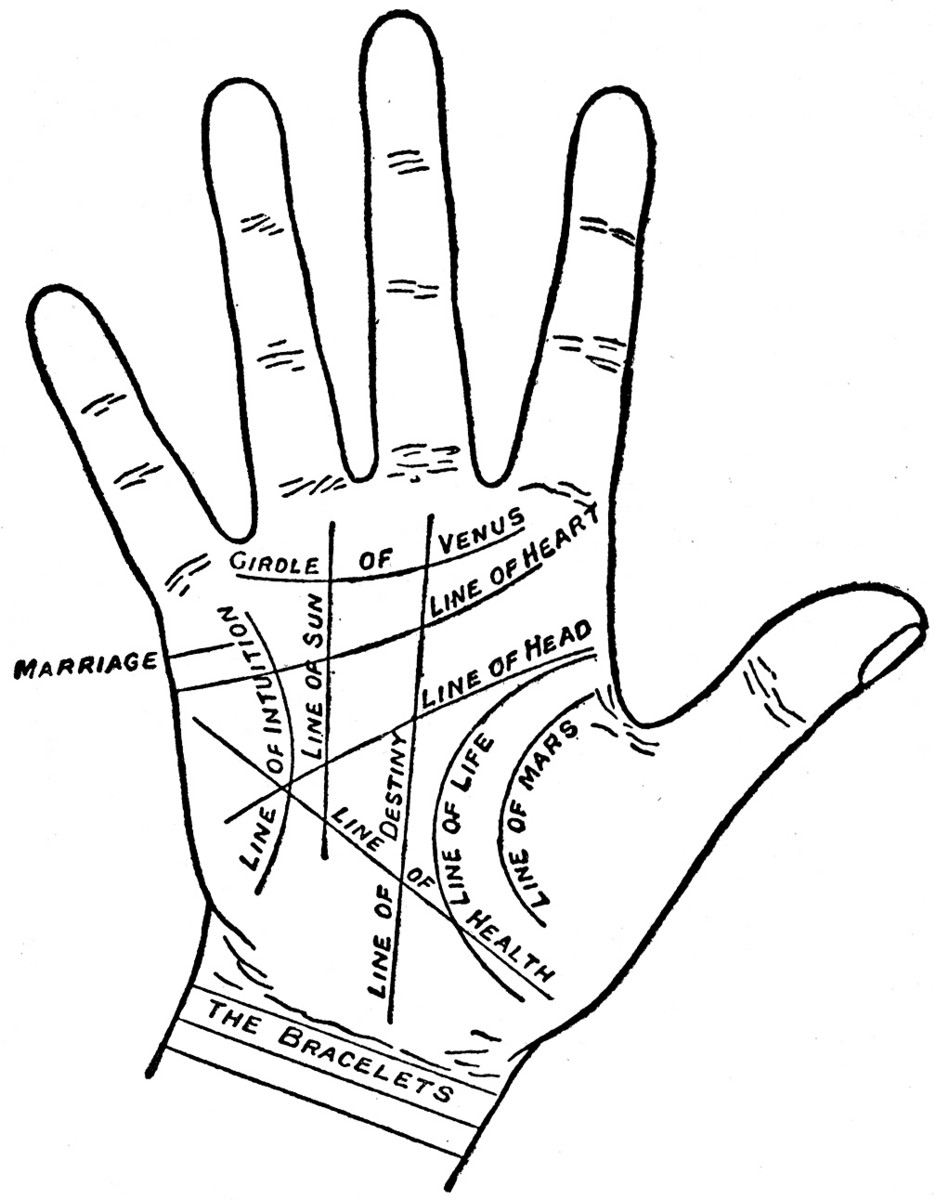
Where the Marriage Line Sits on Your Hand
Hold your hand flat, palm up. Find the percussion edge — the outer edge below the pinky finger — and look at the small patch of skin between the heart line and the base of the Mercury finger. The marriage lines run inward from the edge of the palm, almost always horizontally, and rarely cross more than a third of the palm.
A common beginner mistake is to read the girdle of Venus as a marriage line. The girdle sits much higher up, arcing under the middle and ring fingers, and means something different — heightened sensitivity, often emotional volatility. Marriage lines stay low and stay on the edge.
How Marriage Lines Are Counted and Dated
Only count lines that clearly cross more than a third of the percussion zone. Faint micro-scratches and superficial creases do not qualify — every adult palm has some, and counting them all is how you end up "predicting" eight marriages. The deepest, longest line is the principal marriage line; the others are secondary attachments.
Classical dating maps the gap between the heart line and the base of the pinky across roughly ages 14 to 70, with each line placed proportionally along that span. The deepest line marks the most significant union; lines higher up the percussion zone fall later in life. I treat this dating as a rough age band — early adulthood vs midlife vs late midlife — and never as a year. Same caveat as life-line dating in the 9-step guide: long-range palm dating is unreliable past a year or two.
The Eight Marriage Line Patterns Worth Knowing
Classical marriage palm reading lines fall into eight patterns that come up over and over again. For each, I give the classical reading, what I have actually seen in practice, and an honest note on where the tradition is shakier than it sounds.
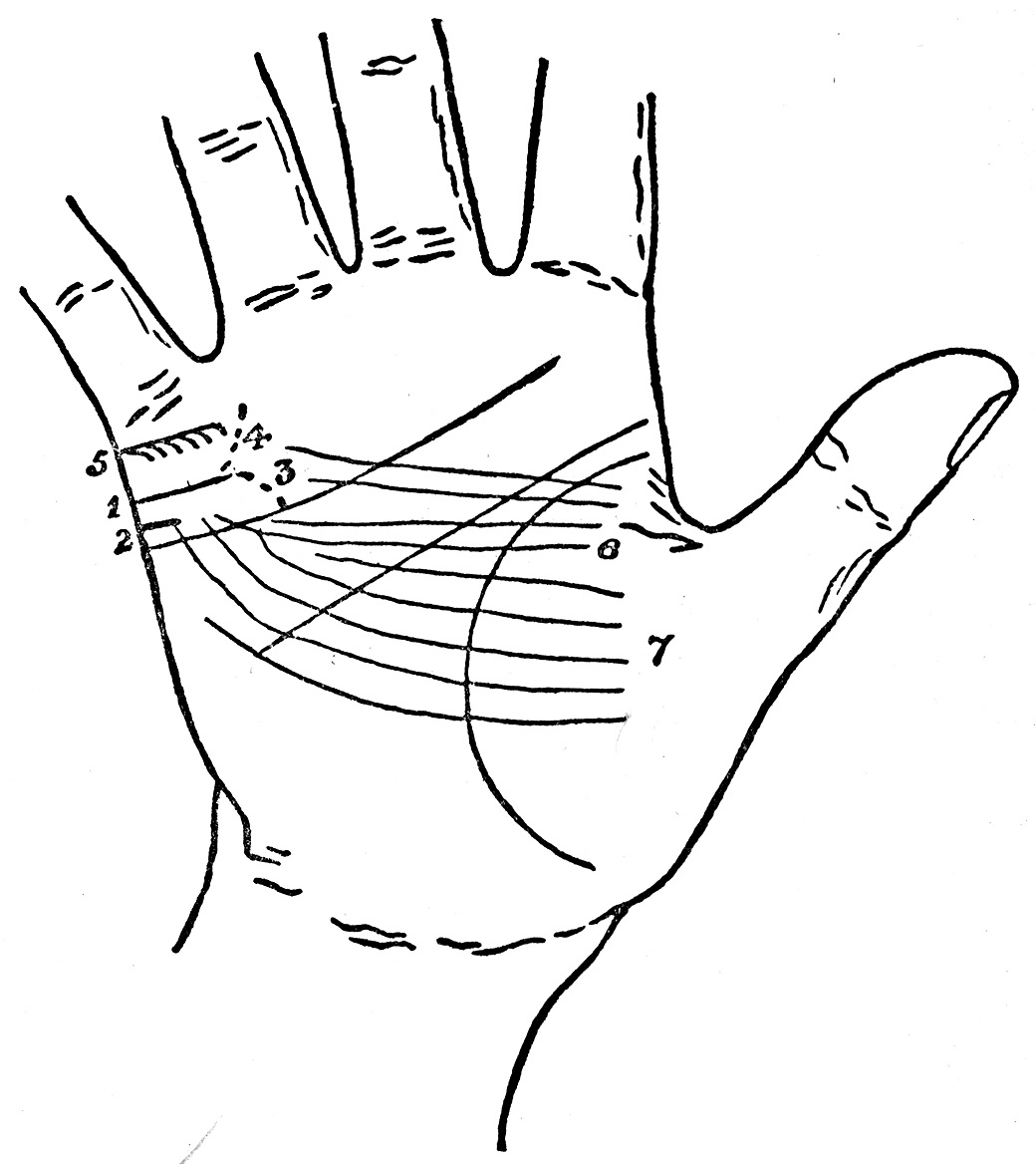
A single, deep, straight line
A single, clean, deep marriage line is the classical "one stable, defining partnership" pattern. It does not promise that the union begins early, or that it is conventional in form — only that, whenever it forms, it is the central romantic structure of that person's life. Honest note: a clean line on one hand only is much weaker than a clean line on both.
Multiple parallel lines
Two or three parallel lines are read as several significant unions or union-like attachments across a lifetime. This is the pattern that worries readers the most ("does this mean cheating?") — and the answer is no, it usually means the person forms several deep attachments over decades. Close, loyal friendships sometimes register as additional marriage lines too.
A forked end
A line that splits at its outer end usually reads as separation or distancing within an existing relationship — drifting apart, not a sharp end. A fork at the inner end of the line (near where the line begins) reads as a hesitant or false-start beginning. The deeper and longer the fork, the stronger the signal; a tiny split at the end is barely worth mentioning.
A broken or interrupted line
A clear break in a marriage line is the classical sign of interruption. If the second piece visibly overlaps the first, the classical reading is reconciliation — a relationship that pauses and then resumes. If a clean gap sits between the two pieces, it reads as a definite break. I only treat this as conclusive when another part of the hand confirms it.
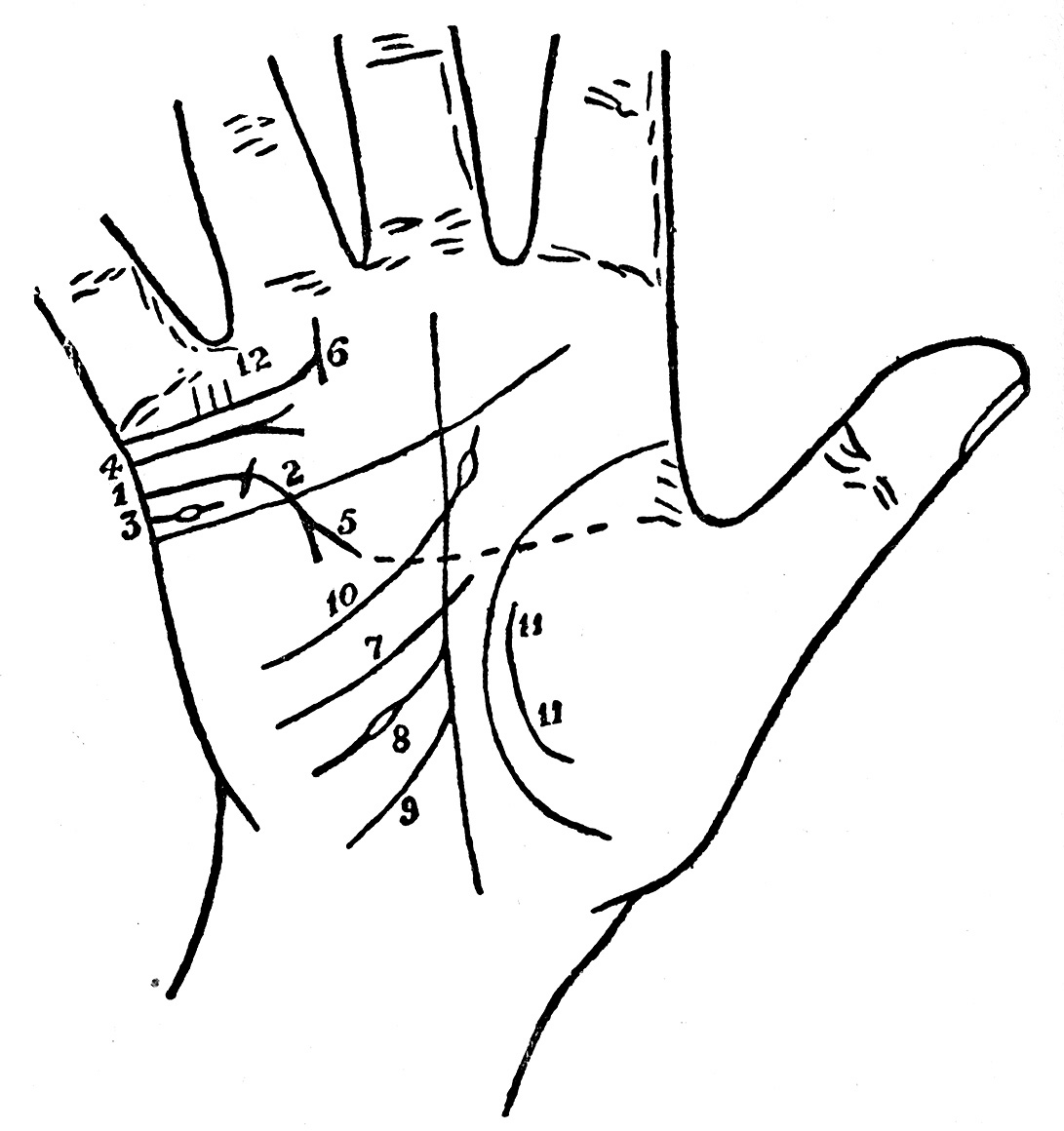
A chained or wavy line
A chained or wavy marriage line is read less as a discrete event and more as a temperament inside relationships — emotional turbulence, indecision, frequent restlessness. People with this pattern often describe themselves as "complicated in love" before you ever bring up palmistry.
An island on the line
An island — a small loop in the middle of the line — marks a difficult period in that relationship, often stress- or health-driven on one side. The classical reading treats it as a temporary weakening of the union, not a termination. Once the island ends, the line continues, and so does the relationship.
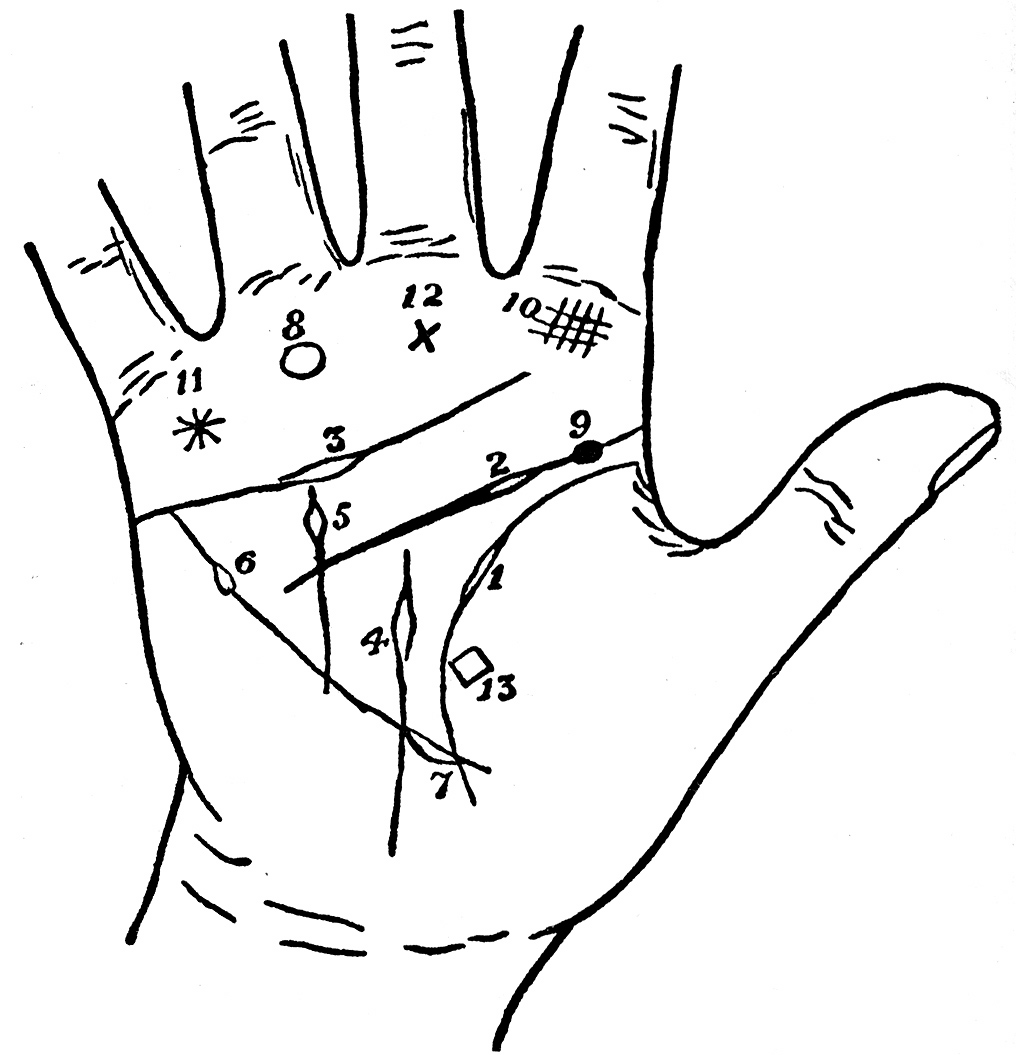
A line curving upward toward the Sun finger
A marriage line that curves upward toward the Sun (Apollo) finger — the ring finger — is the classical "marriage brings social rise" pattern. Career and partnership reinforce each other in this reading; the partner is associated with public recognition or material lift. In practice, I treat it as a tendency toward partnerships that are publicly visible, not as a guarantee of wealth.
A line curving downward toward the heart line
A marriage line that dips toward the heart line is the single most over-dramatized pattern in modern palmistry. The classical reading is "loss of the partner" — but in practice it is far more often a marker that the partner becomes a source of emotional weight: illness, financial strain, mental load. The steeper the dip, the heavier the read. A faint downward tilt is not the same thing as a sharp curve and should not be read as ominous.
How the Marriage Line Relates to the Heart Line
The marriage line and the heart line are read together. The heart line describes how a person loves — depth, restraint, idealism, the affective style. The marriage line describes what unions actually formed. A strong heart line with a faint marriage line means the person has a great deal of feeling but few committed unions to show for it. The reverse — a weak heart line with a strong marriage line — usually means a long, central partnership held together by structure or duty rather than continuous emotional intensity.
When the two lines come into open contact, the reading shifts. A marriage line that bends down and merges into the heart line is the classical pattern for partner-loss; a marriage line that ends in a clear fork pointing into the heart line reads as the relationship's emotional core breaking apart. None of these readings stand on their own — they only become real when the rest of the hand agrees.
What a Short or Missing Marriage Line Actually Tells You
Short marriage line: the union is brief, shallow, or did not reach the intensity that the rest of the hand expected. It is not a curse and not a doom signal. A short marriage line on a hand with a balanced heart line and a developed Venus mount usually points to a person whose primary attachment was real but quieter than average.
Missing marriage line: more common than beginners assume, and absolutely not a curse. Cheiro himself noted in 1916 that absent affection lines appear in many happily partnered hands, especially soft hands or hands with a busy percussion edge that obscures small marks. Read the heart line and Venus mount before concluding anything — those two together tell you more about someone's actual relationship life than any single marriage-line absence ever will.
Reading Marriage Lines on Both Hands
The dominant / non-dominant rule from the main palm reading guide applies cleanly here. The dominant hand shows the relationship reality you are living now; the non-dominant hand shows the romantic temperament you inherited. If both hands carry the same marriage lines in the same places, the reading is much stronger. If they disagree dramatically — a strong central marriage line on one hand only — the person is probably consciously rewriting a family-pattern script, either toward more commitment than they grew up with, or away from a default they did not want.
Limits: What the Marriage Line Cannot Tell You
To match the honest-tradeoff tone of the rest of this site, here is what marriage lines cannot reliably tell you, full stop:
- The exact date of a wedding, partnership, or breakup. Long-range dating is unreliable past one or two years.
- The gender of a partner. The popular online claim that the marriage line indicates partner gender has no support in classical palmistry and no observational backing.
- The identity of a partner. Palmistry describes the person whose hand you are reading, not the people they meet.
- Whether a marriage will succeed by any modern measure. Success in modern terms — happiness, stability, mutual growth — is shaped by factors no palm line tracks.
What marriage lines can describe is the texture of attachment in someone's life: how many deep unions tend to form, whether the central partnership is stable or turbulent, where stress shows up inside the relationship at the moment of reading. Read at that level, and the lines are useful. Read past it, and you are guessing.
Frequently Asked Questions
What does a marriage line mean in palm reading?
The marriage line — classically called the line of affection — is a short horizontal line on the percussion edge of the hand, between the heart line and the base of the pinky. It marks a significant union or attachment in someone's life, not literally a legal marriage. Most adults have one to three such lines.
Where exactly is the marriage line on the hand?
Look at the outer edge of the palm, just below the pinky finger and above the heart line. The lines run inward from the percussion side, usually no more than a centimetre or two long. Beginners often confuse them with the girdle of Venus, which sits higher up under the middle and ring fingers.
What does a short marriage line mean?
A short marriage line usually points to a brief or shallow union, or one whose intensity did not match the rest of the hand. It is not a doom signal on its own. Read it alongside the heart line and the Venus mount before drawing any conclusion.
What does a broken marriage line mean?
Classical palmistry reads a broken marriage line as a separation. In practice, if the two segments overlap, it usually means an interruption followed by reconciliation, while a clean gap between them more often signals a definite ending. Only treat it as conclusive when other lines confirm the same story.
What do multiple marriage lines mean?
Multiple marriage lines indicate several significant unions or union-like attachments across a lifetime — not literal multiple marriages and not evidence of infidelity. Many people with several deep friendships register them as additional marriage lines.
What does a forked marriage line mean?
A fork at the end of the marriage line usually reads as drifting apart in an existing relationship rather than a sharp ending. A fork at the start of the line reads as a hesitant or false-start beginning. The deeper the fork, the stronger the signal.
What if I have no marriage line?
Missing marriage lines are surprisingly common, especially on soft hands or busy percussion edges, and they are not a curse. Cheiro himself noted in 1916 that absent affection lines occur in many happily partnered people. Read the heart line and Venus mount in combination before concluding anything.
Which hand should I read for the marriage line?
Read the dominant — that is, the writing — hand for your present-day relationship reality, and the non-dominant hand for inherited romantic temperament. If the two hands disagree sharply, you are probably consciously rewriting a family pattern.
Can the marriage line change over time?
Yes. Marriage lines are among the more changeable lines on the hand and they shift as life and relationships shift. It is reasonable to recheck them once a year rather than treat any single reading as permanent.
Does the marriage line predict when I will get married?
Classical palmistry maps the gap between the heart line and the base of the pinky across roughly ages 14 to 70, with the deepest line marking the most significant union. Like all palm dating, it is unreliable beyond a year or two. Treat the dating as a rough age band, not a wedding calendar.
Does a curved marriage line mean divorce?
A downward curve toward the heart line is the classical loss-of-partner reading, but in practice it more often marks a partner-related burden — illness, financial weight, emotional drain — than literal divorce or death. The steeper the dip, the heavier the read. Do not over-interpret a slight curve.
Can the marriage line show the gender of my partner?
No. Claims that the marriage line indicates the gender of a future partner are common online but have no support in classical palmistry texts and no observational backing in modern reading.
Is the marriage line the same as the relationship line or line of affection?
Yes — these are three names for the same set of horizontal lines below the pinky. Line of affection is the classical term used by Cheiro in 1916, while marriage line is the most common modern name. Some recent palmists prefer relationship line because it is honest about what the markings actually describe.
Where to Go Next
If you want the full framework — hand shape, thumb, mounts, all four major lines, dating method, the mistakes most beginners make — read the 9-step palm reading guide. The marriage line is one piece of a larger reading, and reading it in isolation is exactly the mistake that makes beginners overreact to a single curve.
If you want a structured reading of your own palm in about a minute, scan your hand on the Scan page. It walks through the same classical framework this guide draws from and flags the marriage-line patterns it finds.
A dedicated heart line deep dive is on the way and will live at /docs/lines/heart-line once shipped. Until then, the heart line section of the main guide is the cleanest reference.
Image credits. All plates on this page are reproduced from Cheiro's Palmistry for All (G.P. Putnam's Sons, 1916), now in the public domain. Scans courtesy of Project Gutenberg.